
From the Chilehaus to the Elbphilharmonie: Hamburg is a city whose identity is visible in its buildings.
Hamburg is not a city of grand spectacles. Compared to Berlin or Paris, the Hanseatic city presents itself as restrained, almost understated, and that is precisely what makes it exciting for architecture lovers. Those who know the most.
1. Chilehaus, the Icon of Brick Expressionism
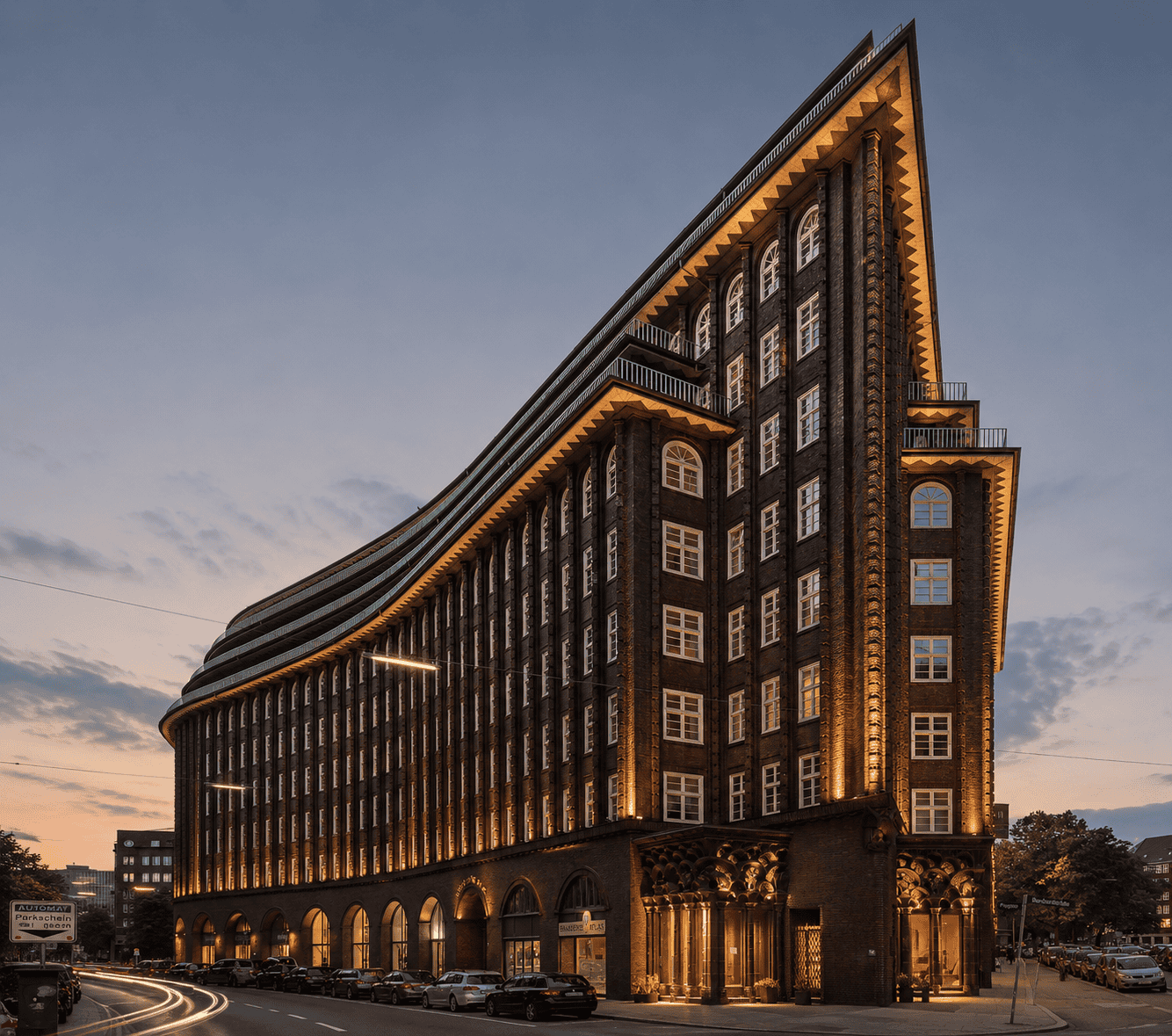
The Chilehaus is one of Hamburg's most important 20th-century architectural icons and, since 2015, a UNESCO World Heritage site as part of the Kontorhaus district. Architect Fritz Höger built it between 1922 and 1924. The pointed, ship-shaped building between Burchardplatz and Pumpen street is not coincidentally reminiscent of a ship's bow. Client Henry B. Sloman had made his fortune trading saltpeter from Chile and named the office building after the country.
What distinguishes the Chilehaus is the artful clinker facade on a modern reinforced concrete structure for its time, which made the distinctive spire possible in the first place.
 AI Content
2. Speicherstadt, the UNESCO World Heritage site by the water
The Speicherstadt was built between 1883 and 1927 and remains the largest warehouse complex in the world to this day. Since 2015, it has been a UNESCO World Heritage Site along with the Kontorhausviertel. With its red brick facades, Gothic-inspired turrets, and direct connection to the water, it is considered particularly typical of Hamburg.
What many people don't know is that the Speicherstadt stands on thousands of wooden piles driven deep into the soft subsoil. Every renovation must preserve this substance, making the Speicherstadt one of the most challenging renovation projects in Europe.
3. Hamburg City Hall, Neo-Renaissance with Self-Awareness
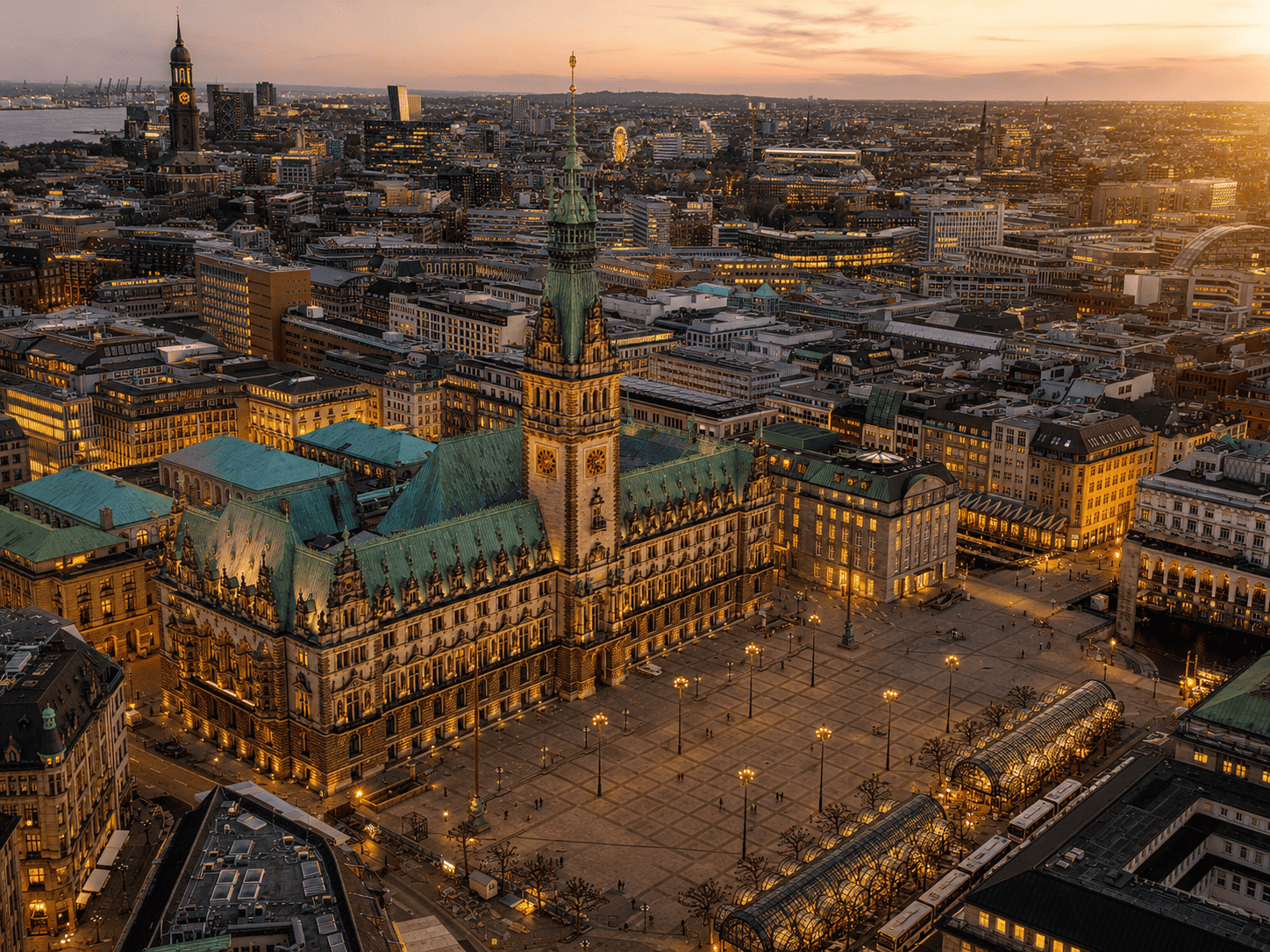
The Hamburg City Hall was built between 1886 and 1897 under the direction of Martin Haller and seven other architects in the Neo-Renaissance style. With its 647 rooms, it even surpasses Buckingham Palace, a Hanseatic flourish that is often mentioned. The magnificent sandstone facade and the 112-meter-high tower are an expression of a city that never shied away from showing its status. Particularly worth seeing are the Phoenix Hall and the Council Hall with their monumental allegories of shipping and trade.
 AI Content
4. St. Michaelis, the „Michel“ as a Hanseatic landmark
St. Michael's Church, affectionately known by everyone as „Michel,“ is Hamburg's quintessential landmark. The current Baroque church was built by Johann Leonhard Prey and Ernst Georg Sonnin, with the distinctive tower added later in 1786. At 132 meters high, it served for centuries as the first visible sign for arriving ships that Hamburg was within reach. The observation deck offers a sweeping view over the Elbe River, the harbor, and the city center.
5. Elbphilharmonie, World-Renowned Concert Hall
The Elbphilharmonie by Herzog & de Meuron, opened in 2017, has changed Hamburg architecturally more than any structure since the Chilehaus. Built on top of an old warehouse, it combines historical substance with cutting-edge contemporary architecture.
What sets the Elbphilharmonie apart are the approximately 1,100 individually shaped glass panels of the facade, the floating concert hall acoustics inside, and the plaza at about 37 meters high, which offers one of the best views of Hamburg. The Elbphilharmonie is now considered one of the leading concert halls worldwide.
6. Köhlbrandbrücke: A Landmark with an Expiration Date
The Köhlbrand Bridge, completed in 1974, is one of Hamburg's most unmissable architectural icons. With its distinctive cable-stayed design, it has shaped the harbor skyline for over four decades, as visible from afar as „Michel“. Its end, however, is foreseeable: The Senate has decided, contrary to the recommendation of some heritage conservators, to replace the now dilapidated bridge with a higher new construction, which will nevertheless be visually similar to its predecessor. However, the successor is unlikely to be opened to traffic before the end of the 2030s.